

Why Safe Practice Shouldn’t Become Risk-Avoidant Practice
Keeping children safe is one of the most important responsibilities we have in schools. But there is an important difference between keeping children safe from serious harm and removing every element of challenge, uncertainty and manageable risk from their play.
As adults, our instinct is understandably to protect. Yet when we become too risk-averse, we can unintentionally remove some of the very experiences children need in order to grow in confidence, develop judgement, solve problems and learn what they are capable of.
Recent research into free play, alongside longstanding guidance from the Health and Safety Executive, gives schools a timely reason to reconsider the balance.
New evidence strengthens the case for free play
A 2026 systematic review published in Mental Health & Prevention examined research into free play and the mental wellbeing of school-aged children and young people.
The researchers reviewed 24 studies involving approximately 13,755 participants. Across 41 reported impacts relating to mental wellbeing, 36 were positive, five were neutral or unclear and none were negative.
The review concluded that the evidence supports positive associations between free play and mental wellbeing across childhood and into adolescence, while also making clear that further high-quality research is needed.
Importantly, positive outcomes were found in both child-initiated and adult-initiated free play.
For schools, I think this raises an important question:
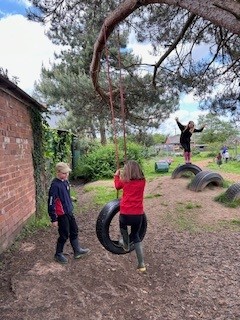
Are we giving children enough genuine opportunities to play, explore, experiment and make decisions for themselves? Or, with the best of intentions, are adults increasingly organising, directing and controlling children’s play?
Safety does not mean eliminating risk
There is sometimes a perception in schools that health and safety requirements mean eliminating as much risk as possible.
The Health and Safety Executive’s position is very different.
Its joint high-level statement, Children’s Play and Leisure: Promoting a Balanced Approach, recognises the importance of challenging play opportunities and makes clear that the goal when planning play is not to eliminate risk, but to weigh risks against benefits.
HSE supports play environments that are well managed but still contain appropriate challenge. It warns against creating sterile environments because of mistaken health and safety concerns.
That distinction matters enormously.
A playground without any challenge is not necessarily a better playground.
Children need opportunities to test themselves: to balance, climb, run, negotiate, build, explore, assess situations, make mistakes and try again.
Of course, schools must identify and manage serious and unnecessary hazards. Broken equipment, unsafe surfaces or genuinely dangerous situations cannot simply be labelled ‘risky play’.
But a child climbing, balancing, moving at speed or attempting something they have not tried before presents a different question:
What are the benefits of this experience, what are the real risks, and how can we manage those risks proportionately without removing the opportunity?
From risk assessment to risk–benefit thinking
This is why I believe risk–benefit assessment should become a much more familiar part of conversations about school play. Traditional risk assessment can sometimes begin with:
‘What could go wrong?’ Risk–benefit thinking adds another vital question: ‘What could children gain from being allowed to do this?’ Imagine children wanting to balance along a log.
We could remove the log because somebody might fall. Alternatively, we could consider the likelihood and severity of injury, the condition and positioning of the log, the surrounding surface, the age and capabilities of the children and any reasonable controls. Then we consider the benefits: balance, co-ordination, judgement, confidence, perseverance, physical competence and learning to assess personal limits.

The aim isn’t to ignore risk. It is to make a sensible, informed and proportionate judgement. HSE itself supports risk–benefit assessment as a sensible approach to managing risk in play.
Children need to learn about risk
We cannot prepare children for a world containing risk by creating childhood environments from which all risk has been removed.
Children gradually develop judgement by experiencing manageable challenge.
They discover:
‘That’s higher than I expected.’
‘I need to slow down.’
‘I can do this.’
‘I’m not ready for that yet.’
‘I’ll try another way.’
‘Can you help me?’
‘I did it!’
Those moments matter.
They involve problem-solving, self-awareness, persistence, decision-making and confidence.
And sometimes children will make mistakes.
HSE explicitly acknowledges that accidents and mistakes happen during play. Good practice is therefore not about guaranteeing that nothing will ever happen. It is about adults exercising sensible professional judgement, managing significant risks and creating environments in which the developmental benefits of play are not unnecessarily lost.
The role of the adult matters
None of this means adults should simply stand back regardless of what is happening. Skilled playtime supervision involves knowing when to intervene – and when not to. Sometimes a child needs immediate adult support.
Sometimes they need a question. Sometimes they need encouragement. And sometimes they need an adult to remain nearby while giving them the opportunity to work something out for themselves.
This is something we explore extensively in our Positive Playtimes work with Lunchtime Supervisors. The best playground adults aren’t simply there to police rules and stop things happening. They observe, understand, enable, include, encourage and intervene proportionately. Their role is not to eliminate play’s uncertainty.
It is to help create an environment in which children can play freely and inclusively, as safely as necessary, while experiencing appropriate challenge.
A question for every school
I would encourage school leaders and playtime teams to walk around their playground and ask:
Sometimes they need a question. Sometimes they need encouragement. And sometimes they need an adult to remain nearby while giving them the opportunity to work something out for themselves.
This is something we explore extensively in our Positive Playtimes work with Lunchtime Supervisors. The best playground adults aren’t simply there to police rules and stop things happening. They observe, understand, enable, include, encourage and intervene proportionately. Their role is not to eliminate play’s uncertainty.
It is to help create an environment in which children can play freely and inclusively, as safely as necessary, while experiencing appropriate challenge.
Have we removed anything because it is genuinely unsafe – or because adults feel uncomfortable with children experiencing manageable risk?
Then look at the opportunities available.
Can children climb?
Can they balance?
Can they build?
Can they move things?
Can they explore?
Can they run?
Can they experiment?
Can they make choices?
Can they create their own games?
Can they experience appropriate physical challenge?
Can they take manageable risks?
And importantly, are these opportunities accessible to all children, including children with SEND and neurodivergent pupils?
This is also about equity. Riskier and more adventurous play shouldn’t automatically become something available only to the most physically confident children.
Every child should have opportunities to experience appropriate challenge in ways that work for them.
How this fits with our Positive Playtime Award Programme
These questions are central to our Positive Playtime Award Programme, which supports schools to develop happy, harmonious and inclusive playtimes where every child has opportunities to play, connect and belong.
The Award Programme encourages schools to look at the whole playtime experience – not simply behaviour and the absence of incidents, but the quality, variety and inclusivity of the play opportunities available.
We encourage schools to consider whether children have opportunities to be active, creative, social and imaginative; whether they have choice and agency; whether children with SEND and neurodivergent pupils can participate and belong; and whether the playground provides appropriate opportunities for challenge, exploration and manageable risk.
An important part of creating enriching playtimes is therefore finding the right balance between protecting children from serious harm and allowing them the freedom to test themselves, make decisions and experience appropriate challenge.
Rather than asking only: ‘Is our playground safe?’ we can also ask: ‘Does our approach to safety still allow children to experience the challenge, freedom, choice and enriching play opportunities they need to thrive?’
These two ambitions do not have to compete.
Good play provision protects children from serious harm without protecting them from every challenge.
By taking a balanced and proportionate approach to risk, schools can create playtimes where children can explore, experiment, make decisions, develop confidence, build resilience and discover what they are capable of.
That is an important part of creating truly Positive Playtimes.
Get your FREE Positive Playtimes Risk–Benefit Assessment
Would you like to take a fresh look at how your school manages risk at playtimes?
Contact us to receive your FREE Positive Playtimes Risk–Benefit Assessment, designed to help your school consider the benefits of play alongside foreseeable risks, appropriate controls and children’s need for challenge, freedom and growing independence.
And if you would like support to develop happier, more harmonious and inclusive playtimes across your whole school, ask us about our Positive Playtime Award Programme.
Contact Positive Playtimes today and take the next step towards safer, richer and more enriching playtimes where every child has the opportunity to play, connect and belong.